Table of Contents
- Introduction: Understanding the Cost of Umbrella Insurance
- What Is the Average Cost of Umbrella Insurance per Year?
- Typical Annual Cost Ranges
- Why Umbrella Insurance Is Relatively Inexpensive
- Lower Claim Frequency
- Risk Layering
- Broad Risk Pooling
- Factors That Affect Umbrella Insurance Cost
- 1. Coverage Limits Selected
- 2. Underlying Insurance Limits
- 3. Personal Risk Profile
- 4. Location and State Regulations
- Umbrella Insurance Cost vs. Potential Financial Exposure
- Realistic Liability Scenarios
- Umbrella Insurance Cost vs. Other Insurance Options
- Increasing Primary Policy Limits
- Umbrella Insurance Advantage
- Is Umbrella Insurance Worth the Annual Cost?
- Financial Value Perspective
- How to Lower Your Umbrella Insurance Premium
- Bundle Policies
- Maintain a Clean Risk Profile
- Choose Appropriate Coverage Levels
- Umbrella Insurance and High-Net-Worth Individuals
- Common Misconceptions About Umbrella Insurance Cost
- “Umbrella Insurance Is Only for the Wealthy”
- “It Duplicates Existing Coverage”
- “Claims Are Rare, So It’s Not Necessary”
- How Insurers Calculate Umbrella Insurance Premiums
- Key Takeaways on Umbrella Insurance Costs
- Final Thoughts
Introduction: Understanding the Cost of Umbrella Insurance
When evaluating personal liability protection, cost is often the first concern for consumers. While many people assume that additional insurance layers must be expensive, Umbrella Insurance is surprisingly affordable given the level of protection it provides.
Understanding how much does umbrella insurance cost per year helps individuals and families make informed decisions about managing liability risks in the United States. This article provides a detailed cost breakdown, explains what factors influence pricing, and evaluates whether umbrella insurance delivers true financial value.
What Is the Average Cost of Umbrella Insurance per Year?
In the United States, umbrella insurance is typically priced as an annual premium. While exact costs vary by insurer and individual risk profile, most consumers are surprised by how inexpensive umbrella insurance can be.
Typical Annual Cost Ranges
-
$1 million coverage: $150–$300 per year
-
$2 million coverage: $225–$450 per year
-
$5 million coverage: $375–$750 per year
These averages demonstrate why umbrella insurance is often described as one of the highest-value insurance products available in the U.S. market.
Why Umbrella Insurance Is Relatively Inexpensive
Despite providing millions of dollars in liability protection, umbrella insurance costs significantly less than many people expect. Several structural factors contribute to this affordability.
Lower Claim Frequency
Umbrella insurance only activates after primary insurance limits are exhausted. Because catastrophic claims are less frequent than minor incidents, insurers face lower overall claim volume.
Risk Layering
Umbrella insurance functions as a secondary coverage layer. By requiring underlying policies to absorb initial losses, insurers reduce exposure and can offer lower premiums.
Broad Risk Pooling
Umbrella insurance is often bundled with home and auto policies, allowing insurers to spread risk efficiently across large policyholder groups.
Factors That Affect Umbrella Insurance Cost
While umbrella insurance is generally affordable, premiums are not identical for every policyholder. Understanding the variables that influence pricing helps explain how much does umbrella insurance cost per year for different individuals.
1. Coverage Limits Selected
The most direct pricing factor is the coverage limit you choose.
-
Higher limits increase premiums
-
Additional million-dollar increments often cost less per unit
For example, moving from $1 million to $2 million in coverage usually costs less than doubling the initial premium.
2. Underlying Insurance Limits
Umbrella insurance requires minimum liability limits on your primary policies, such as:
-
Auto insurance
-
Homeowners or renters insurance
If your current policies do not meet required limits, you may need to increase them, indirectly affecting total insurance costs.
3. Personal Risk Profile
Insurers evaluate several personal risk factors, including:
-
Driving history
-
Number of vehicles
-
Homeownership status
-
Presence of teenage drivers
-
Pet ownership (especially certain dog breeds)
-
Recreational vehicles or boats
Higher-risk profiles generally result in higher umbrella insurance premiums.
4. Location and State Regulations
Where you live in the U.S. matters. Some states have:
-
Higher litigation rates
-
Larger jury awards
-
Greater population density
These factors can influence umbrella insurance pricing at the state level.
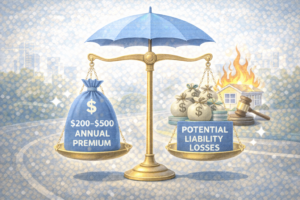
Umbrella Insurance Cost vs. Potential Financial Exposure
To truly evaluate umbrella insurance pricing, cost must be compared to potential liability exposure.
Realistic Liability Scenarios
-
A severe auto accident with multiple injured parties
-
A lawsuit involving permanent disability
-
A defamation claim involving online content
-
An injury on rental property
In many U.S. cases, judgments and settlements can exceed $1 million. When measured against these risks, umbrella insurance premiums appear minimal.
Umbrella Insurance Cost vs. Other Insurance Options
Consumers often ask whether increasing home or auto insurance limits is a better alternative to purchasing umbrella insurance.
Increasing Primary Policy Limits
-
Auto and homeowners insurance premiums increase significantly at higher limits
-
Coverage scope remains limited to specific policy types
Umbrella Insurance Advantage
-
Broader coverage across multiple risk types
-
Lower marginal cost per additional dollar of protection
-
Includes personal injury liability often excluded elsewhere
This comparison highlights why umbrella insurance is often the most cost-effective liability solution.
Is Umbrella Insurance Worth the Annual Cost?
When evaluating how much does umbrella insurance cost per year, the more important question is whether the cost justifies the protection.
Financial Value Perspective
For a few hundred dollars per year, umbrella insurance can:
-
Protect personal assets
-
Safeguard future income
-
Cover legal defense expenses
-
Reduce financial stress during lawsuits
From a cost-benefit standpoint, umbrella insurance offers exceptional value.
How to Lower Your Umbrella Insurance Premium
Although umbrella insurance is already affordable, several strategies can help minimize costs.
Bundle Policies
Purchasing umbrella insurance from the same insurer as your home and auto policies often results in discounts.
Maintain a Clean Risk Profile
-
Safe driving records
-
No major liability claims
-
Responsible pet ownership
Choose Appropriate Coverage Levels
Avoid over-insuring by selecting coverage limits aligned with asset exposure and risk tolerance.
Umbrella Insurance and High-Net-Worth Individuals
For individuals with substantial assets, umbrella insurance costs may be higher, but so is the potential exposure.
High-net-worth policyholders often purchase:
-
$5 million to $10 million in coverage
-
Customized umbrella policies
-
Excess liability endorsements
In these cases, cost increases proportionally but remains efficient relative to risk.
Common Misconceptions About Umbrella Insurance Cost
“Umbrella Insurance Is Only for the Wealthy”
In reality, umbrella insurance is affordable for middle-income households and protects future earnings as well as current assets.
“It Duplicates Existing Coverage”
Umbrella insurance supplements, rather than duplicates, primary insurance policies.
“Claims Are Rare, So It’s Not Necessary”
While claims are infrequent, their financial impact can be catastrophic—making insurance essential.
How Insurers Calculate Umbrella Insurance Premiums
Insurers use actuarial models that consider:
-
Historical claim data
-
Individual risk factors
-
Geographic exposure
-
Policy structure
Because umbrella insurance claims are less frequent but severe, pricing focuses on risk probability rather than expected usage.
Key Takeaways on Umbrella Insurance Costs
-
Umbrella Insurance is one of the most affordable forms of high-limit liability coverage.
-
Understanding how much does umbrella insurance cost per year helps clarify its value.
-
Average premiums range from $150 to $750 annually, depending on coverage level.
-
Cost varies based on risk profile, location, and underlying insurance limits.
-
Compared to potential liability exposure, umbrella insurance offers exceptional financial protection.
Final Thoughts
In the U.S., legal claims can escalate quickly and unpredictably. Umbrella insurance provides a powerful financial safety net at a relatively low annual cost. For individuals seeking comprehensive liability protection, understanding umbrella insurance pricing is a crucial step toward informed decision-making.
In the next article, we will explore umbrella insurance coverage limits and explain how policy limits work to protect assets and future income.
Related Articles

Need a Coverage Guide?
Explore our comprehensive umbrella insurance guides to find the right coverage for your family.
Browse Coverage Guides
Leave a Reply